


Introduction
In today’s highly competitive technology landscape, speed is everything. Hardware startups are under constant pressure to develop products quickly, secure funding, enter the market before competitors, and respond rapidly to customer demands. Delays in manufacturing can lead to missed opportunities, increased costs, and lost market share.
This is one reason why many emerging technology companies are turning to turnkey PCB assembly services. By simplifying the electronics manufacturing process, turnkey solutions help startups move from concept to production much faster than traditional manufacturing methods.
Whether developing IoT devices, wearable technology, industrial sensors, or consumer electronics, startups benefit significantly from streamlined PCB assembly services that reduce operational complexity and accelerate product launches.
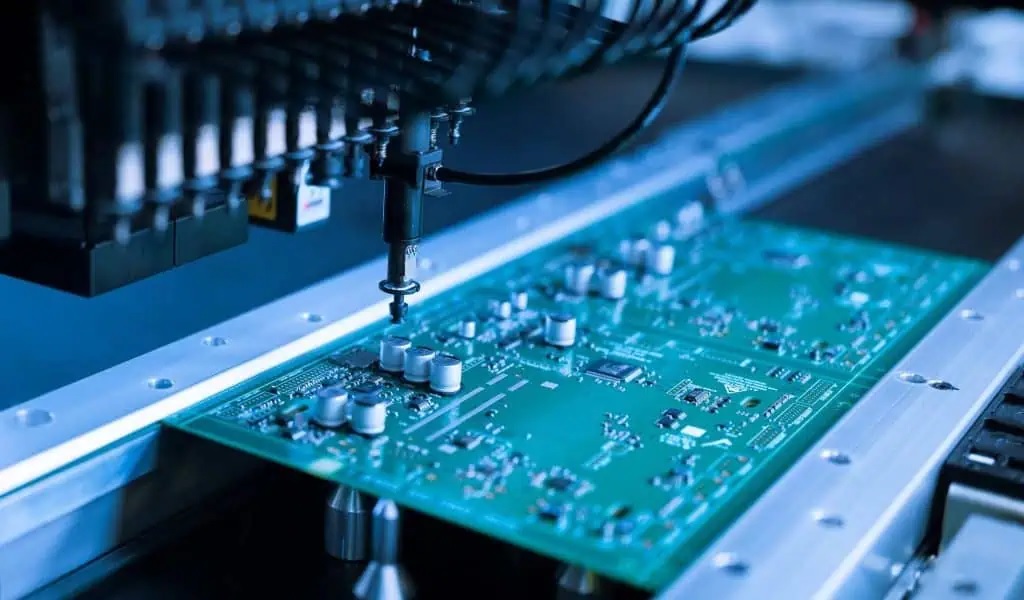
Businesses in the electronics sector often choose pcb assembly services to simplify complex manufacturing requirements and reduce operational costs. Professional assemblers use advanced machinery, automated inspection systems, and experienced technicians to guarantee precision throughout production. Reliable PCB assembly partners also support quick scaling for startups and established manufacturers handling demanding electronic applications.
What Is Turnkey PCB Assembly?
Turnkey PCB assembly is a manufacturing solution where a single provider manages the complete PCB production process.
This typically includes:
- PCB fabrication
- Component sourcing
- SMT assembly
- Through-hole assembly
- Inspection and testing
- Final packaging
Instead of coordinating with multiple suppliers and vendors, startups work with one manufacturing partner that oversees the entire workflow.
This centralized approach saves time, reduces communication issues, and improves production efficiency.
Why Time-to-Market Matters for Hardware Startups
For hardware startups, reaching the market quickly is often critical to survival.
Competitive Advantage
Launching a product before competitors helps startups establish brand recognition and capture early customers.
Faster Revenue Generation
The sooner a product enters the market, the sooner a company can begin generating revenue and attracting investors.
Investor Confidence
Startups that demonstrate rapid development and manufacturing progress are often more attractive to investors.
Product Validation
Fast product deployment allows startups to gather real-world customer feedback and improve future product versions.
Any delays in manufacturing can negatively impact these goals.
How Traditional Manufacturing Slows Down Startups
Traditional electronics manufacturing usually involves multiple vendors handling different production stages.
For example:
- One supplier fabricates PCBs
- Another sources components
- A separate facility handles assembly
- Additional providers perform testing
This fragmented process creates several common problems.
Complex Vendor Coordination
Managing multiple suppliers requires significant communication and project management.
Startups often struggle with:
- Vendor scheduling
- Procurement tracking
- Quality coordination
- Shipping logistics
These responsibilities consume valuable time and resources.
Increased Risk of Delays
If one supplier experiences delays, the entire production timeline can be affected.
Common issues include:
- Component shortages
- Shipping delays
- Inconsistent lead times
- Miscommunication between vendors
For startups operating on tight schedules, these disruptions can be extremely costly.
Higher Administrative Workload
Managing multiple production partners increases operational overhead.
Startup teams are forced to spend time on:
- Supplier communication
- Inventory management
- Purchase orders
- Quality monitoring
This distracts engineering and leadership teams from product development and business growth.
How Turnkey PCB Assembly Accelerates Product Development
Turnkey PCB assembly addresses these challenges by creating a unified and efficient manufacturing process.
Centralized Manufacturing Workflow
One of the biggest advantages of turnkey PCB assembly is having a single company manage the entire project.
This improves:
- Communication efficiency
- Production coordination
- Quality consistency
- Timeline management
With fewer moving parts, manufacturing becomes significantly faster and more predictable.
Faster Component Procurement
Component sourcing is often one of the most time-consuming aspects of electronics manufacturing.
Experienced turnkey PCB assembly providers maintain strong supplier relationships and global sourcing networks.
This allows them to:
- Source components faster
- Access better pricing
- Locate hard-to-find parts
- Suggest compatible alternatives
By reducing procurement delays, startups can begin assembly much sooner.
Simultaneous Production Processes
In traditional manufacturing, each stage is often completed separately.
Turnkey providers streamline operations by overlapping multiple stages of production.
For example:
- PCB fabrication begins while components are being sourced
- Assembly preparation starts during procurement
- Testing procedures are planned before production completion
This parallel workflow dramatically shortens production cycles.
Faster Prototyping and Revisions
Hardware startups frequently require multiple prototype iterations before finalizing a product.
Turnkey PCB assembly providers help accelerate prototyping by offering:
- Rapid PCB fabrication
- Quick-turn assembly services
- Engineering support
- Design optimization recommendations
When design changes are needed, the same manufacturing team can quickly implement revisions without lengthy coordination between separate vendors.
This speeds up product refinement and testing.
Improved Design for Manufacturing (DFM)
Many turnkey PCB assembly companies provide Design for Manufacturing (DFM) analysis before production begins.
DFM reviews help identify:
- Potential assembly issues
- Layout inefficiencies
- Component placement problems
- Thermal concerns
- Manufacturability risks
Resolving these issues early prevents production delays and costly redesigns later.
Better Supply Chain Stability
Global electronics supply chains can be unpredictable.
Component shortages and logistics disruptions have become increasingly common in recent years.
Professional turnkey PCB assembly providers help startups manage these challenges through:
- Alternative component sourcing
- Supplier diversification
- Inventory planning
- Procurement forecasting
This reduces the risk of unexpected manufacturing interruptions.
Enhanced Quality Control
Poor product quality can create serious delays for startups.
Manufacturing defects often require:
- Product recalls
- Redesigns
- Reassembly
- Additional testing
Turnkey PCB assembly providers typically maintain strict quality control systems throughout the production process.
Common inspection methods include:
- Automated Optical Inspection (AOI)
- X-ray inspection
- Functional testing
- In-circuit testing
Integrated quality assurance reduces production errors and improves reliability.
Cost Efficiency Helps Startups Scale Faster
Startups usually operate with limited budgets, making cost control extremely important.
Turnkey PCB assembly helps reduce costs through:
- Bulk component purchasing
- Lower shipping expenses
- Reduced labor overhead
- Fewer production errors
- Simplified project management
These savings allow startups to allocate more resources toward research, development, and marketing.
Scalability from Prototype to Mass Production
Another major advantage of turnkey PCB assembly is scalability.
Many startups begin with small prototype batches before transitioning to large-scale production.
A turnkey manufacturing partner can support every stage of growth, including:
- Prototype development
- Low-volume production
- Mid-scale manufacturing
- Full commercial production
This continuity simplifies scaling and reduces onboarding time with new suppliers.
Industries Benefiting from Turnkey PCB Assembly
Many fast-growing industries rely heavily on turnkey manufacturing solutions.
Internet of Things (IoT)
IoT startups need rapid prototyping and scalable production for connected devices.
Medical Electronics
Medical device startups require strict quality control and reliable assembly processes.
Consumer Electronics
Fast product cycles make speed-to-market essential in consumer technology.
Industrial Automation
Smart manufacturing systems often require complex PCB assembly and advanced testing.
Wearable Technology
Compact wearable devices demand high-precision PCB manufacturing and assembly.
Choosing the Right Turnkey PCB Assembly Partner
Not all manufacturing providers offer the same capabilities.
Startups should evaluate:
- Industry experience
- Certifications
- Engineering support
- Testing capabilities
- Production capacity
- Communication quality
- Turnaround times
Selecting the right manufacturing partner can significantly impact project success.
Conclusion
For hardware startups, reducing time-to-market is critical for growth, profitability, and long-term success. Traditional manufacturing methods often create unnecessary delays, complexity, and operational challenges.
Turnkey PCB assembly simplifies the entire production process by combining fabrication, sourcing, assembly, and testing into one streamlined solution.
By improving efficiency, accelerating prototyping, enhancing quality control, and reducing supply chain risks, turnkey PCB assembly helps startups launch products faster and compete more effectively in the rapidly evolving electronics industry.
As hardware innovation continues to accelerate, turnkey manufacturing solutions will remain a valuable strategy for startups looking to bring products to market quickly and efficiently.